
By moving intelligence to the edge, you unlock the true promise of connected devices: the speed to react in real-time, the security to keep secrets on the silicon, and the resilience to work anywhere—even when the internet goes down. But success depends on harmonizing the neural network with the physical constraints of the device, ensuring high-performance intelligence runs reliably on cost-effective silicon within tight power budgets.
As a leading provider of embedded AI development services, Cardinal Peak delivers this balance. We are embedded engineers who understand silicon. We bridge the gap between data science and hardware, handling the end-to-end process of porting state-of-the-art research models into highly optimized, production-ready firmware that runs efficiently on your target hardware.
We take models from the cloud and engineer them into shipping products on cost-effective hardware.
The Shrink Ray: The biggest blocker to Edge AI is model size. We specialize in techniques that reduce memory footprint and latency without sacrificing critical accuracy, ensuring your model fits your BOM target.
We convert FP32 models to INT8 or INT4, often achieving 4x performance gains on dedicated AI accelerators like Hexagon DSPs or Ethos NPUs.
We remove redundant neurons and teach smaller “student” models to mimic larger “teacher” models, fitting complex intelligence into tight memory constraints.
We leverage NVIDIA TensorRT, Apache TVM, and TensorFlow Lite for Microcontrollers to compile models down to highly optimized machine code for specific instruction sets.

The Full Signal Chain: A model is useless without the supporting infrastructure. We provide complete embedded ML integration services, leveraging decades of experience to handle the entire signal chain around the AI.
We write the low-level C/C++ drivers to capture data from cameras, microphones, IMUs, and LiDAR, often performing pre-processing on DSPs before the data hits the AI model.
We integrate the AI inference engine seamlessly into your existing embedded Linux (Yocto/Buildroot) or Real-Time Operating System (FreeRTOS, Zephyr) environment, ensuring deterministic behavior and managing resource contention.
TinyML Focus: We aren’t just talking about powerful gateways like Jetson; we specialize in the extreme constraints of microcontroller AI development. We help you select the right chip for your performance-per-watt requirements and squeeze intelligence onto the smallest silicon.
Deep expertise in running inference on Cortex-M based MCUs from STMicro (STM32), Nordic, and Ambiq.
Implementing inference engines where every kilobyte of SRAM matters, often without the luxury of a full OS.
Benchmarking your specific workload against potential SoCs to validate performance-per-watt before you commit to a BOM.
We have a track record of deploying sophisticated models to the edge, delivering measurable ROI for global leaders. Explore all our AI case studies.
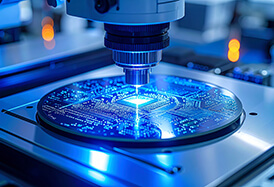
By optimizing 11 CNN models for ARM-based edge devices, we achieved 95% accuracy and under 1-second inspection latency for wafer production.

We engineered a TinyML acoustic anomaly detection system for a global appliance leader, utilizing deep learning and DSP to isolate motor defects in 90dB factory noise.
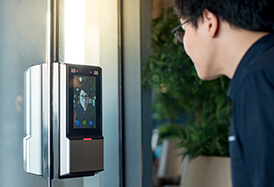
We delivered a high-performance biometric system for 16,000 users, optimizing facial recognition for low-power edge compute to achieve sub-second response times.
By optimizing 11 CNN models for ARM-based edge devices, we achieved 95% accuracy and under 1-second inspection latency for wafer production.
We engineered a TinyML acoustic anomaly detection system for a global appliance leader, utilizing deep learning and DSP to isolate motor defects in 90dB factory noise.
We delivered a high-performance biometric system for 16,000 users, optimizing facial recognition for low-power edge compute to achieve sub-second response times.
Our workflow adapts the standard V-Model of systems engineering to the unique demands of machine learning, ensuring predictable results on your target silicon.
Before writing code, we define the physical reality of the product. We help you select the optimal hardware/model combination to balance performance with unit cost through hardware benchmarking, Model Architecture Search (e.g., MobileNet vs. custom RNN), and defining the power/latency budget. The result is a validated hardware/software blueprint balancing performance goals with BOM cost targets.
Great algorithms require great data. We build pipelines that turn raw sensor inputs into training-ready datasets by designing DSP pipelines for raw data pre-processing (audio/image denoising), executing transfer learning from pre-trained datasets, and fine-tuning with domain data. We deliver a high-accuracy “Golden Model” trained on your specific domain data, ready for optimization.
This is where we execute Embedded AI Porting Services, bridging the gap between “Cloud AI” and “Edge Reality”. We apply INT8/INT4 quantization, model pruning, and compiler optimization using TVM or TensorRT to generate hardware-specific machine code. This produces a highly compressed, hardware-specific model binary that meets latency and memory constraints.
A model is only useful if it talks to the rest of your system. We handle the embedded software engineering required to deploy the model by integrating inference engines (TFLite Micro, Edge Impulse) into FreeRTOS/Zephyr or Embedded Linux, and writing custom C/C++ drivers for sensor-to-NPU data transfer. We deliver production-grade embedded software with fully integrated AI inference, sensor drivers, and RTOS management.
We prove it works. We move beyond software metrics to verify system performance in the real-world using Hardware-in-the-Loop (HIL) for AI. This involves on-device performance benchmarking to measure real-world latency, thermal throttling, and power consumption, alongside regression testing to ensure optimization didn’t degrade accuracy. This provides empirical proof that the device meets all accuracy, latency, and power requirements under real-world conditions.

We are hardware-agnostic engineers. We help you choose the right silicon for the job.





Embedded AI porting services involve adapting Python-based machine learning models, such as PyTorch or TensorFlow, for execution on constrained edge hardware like NPUs and microcontrollers. This process is rarely a simple conversion; it requires analyzing the model architecture to swap unsupported operations, quantizing weights from 32-bit float to 8-bit integers and recompiling the model using target-specific runtimes like TensorRT or TFLite for Microcontrollers to ensure hardware-specific efficiency.
Hiring an embedded engineering firm for AI deployment ensures that machine learning models are optimized for hardware constraints—such as memory management, RTOS integration, and thermal limits—that typically fall outside the scope of traditional data science. We partner with your data scientists to handle the embedded ML integration, ensuring the model runs reliably in the hostile environment of a real-world device without causing system instability or exceeding power budgets.
Edge AI model optimization generally results in minimal accuracy loss, with advanced techniques like Quantization-Aware Training (QAT) often reducing a model’s size by 4x while maintaining within 1% of its original cloud-based accuracy. This marginal trade-off is nearly always justified by the massive gains in inference speed and power efficiency required for successful edge deployment.
The primary difference between Edge AI and microcontroller AI development (TinyML) lies in the severity of hardware constraints, with TinyML targeting chips like the STM32 or Ambiq that operate with minimal SRAM and often without a full operating system. While general Edge AI might utilize powerful Linux-based gateways like NVIDIA Jetson, microcontroller AI requires specialized model architectures and expert bare-metal C++ programming.
The most challenging aspect of embedded AI development is the system integration required to build a robust signal chain that manages real-time data pre-processing and hardware constraints simultaneously. Success depends on capturing data from noisy sensors, processing it on a DSP, and feeding it into an NPU for inference within strict real-time deadlines and thermal limits—an engineering challenge that extends far beyond the model itself.
Edge devices don’t exist in a vacuum. See how we connect your intelligent hardware to the wider system and accelerate development with proven IP.
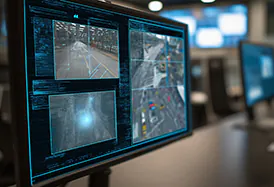
If your edge AI project involves cameras for quality control or automated inspection, don’t start from scratch. Our Visual Inspection Accelerator provides pre-built software blocks for speeding up deployment on hardware like NVIDIA Jetson.
Translating high-accuracy cloud models to the edge requires a disciplined approach. We regularly share the hardware benchmarks and architectural decisions required to move from theoretical data science to production-ready embedded software. Explore all AI engineering articles.
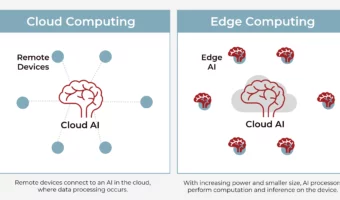
Successfully deploying intelligence requires a deep understanding of the trade-offs between on-device inference and cloud-based models. We break down the technical differences to help you balance latency, power consumption, and BOM costs for production-ready products.
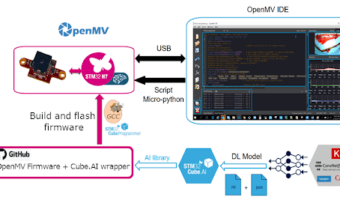
Moving beyond theoretical data science requires hardware-specific optimization. Discover how we utilize tools like STM32Cube.AI to convert neural networks into highly optimized code for microcontroller AI development, ensuring high performance on cost-effective silicon.
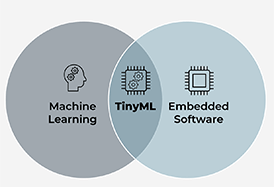
TinyML expands IoT capabilities by enabling sophisticated intelligence on ultra-low-power devices. Learn how our embedded ML integration services squeeze maximum performance out of Cortex-M based MCUs to enable offline, real-time decision-making at the extreme edge.
Successfully deploying intelligence requires a deep understanding of the trade-offs between on-device inference and cloud-based models. We break down the technical differences to help you balance latency, power consumption, and BOM costs for production-ready products.
Moving beyond theoretical data science requires hardware-specific optimization. Discover how we utilize tools like STM32Cube.AI to convert neural networks into highly optimized code for microcontroller AI development, ensuring high performance on cost-effective silicon.
TinyML expands IoT capabilities by enabling sophisticated intelligence on ultra-low-power devices. Learn how our embedded ML integration services squeeze maximum performance out of Cortex-M based MCUs to enable offline, real-time decision-making at the extreme edge.